As consumers continue to seek inexpensive protein options, Reven Brummond of Klein FFA aims to use her years of work in the poultry industry to inspire passion for the future of agriculture.
As part of her Supervised Agriculture Experience (SAE), she completed a variety of research projects to help create larger broiler chickens for consumers.
“With the use of electrolytes and probiotics, I was able to [raise] larger chickens for my consumers,” Brummond said. “With my research, I was able to produce chickens in a six-week period that averaged about a quarter of a pound more a bird for my consumers, which is a 3.7% increase in total meat produced per bird for consumption.”
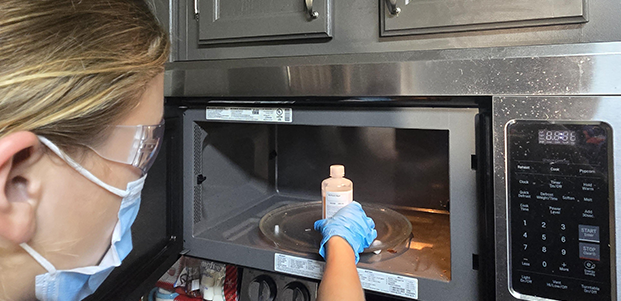
Brummond said that her SAE included seven different research projects. She was able to present information to 10 different groups to advocate for the agriculture and poultry industry during high school.
Her responsibilities initially consisted of feeding the birds, setting up experiments, and doing math for data. As the years have gone by, she now purchases supplies and cares for the birds in her experiments, as well as makes management decisions.
“Now, I have learned to create new methods to follow, expanded my vocabulary and speaking to conduct better conversations with judges and peers in my community,” Brummond said. “This research has helped with the growth of my poultry enterprise, and I
hope that I can help others who wish to do the same.”
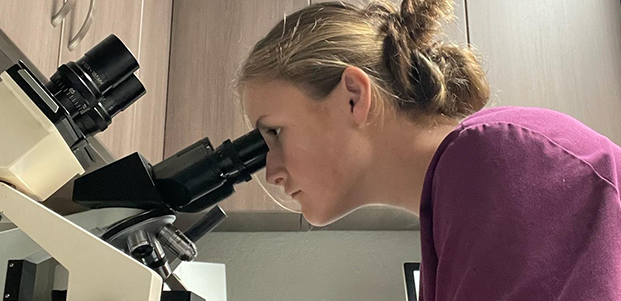
She said her greatest challenge throughout the projects has been combating the weather’s influence on her flock’s health and growth, as well as the influence on bacteria on petri dishes.
“When testing electrolytes and probiotics on the growth of broilers, the warm and humid weather can affect the broilers' consumption of feed and their ability to want to get up and eat,” Brummond said. “To try and fix this problem, I have even tested different insulations to allow steady temperatures and better airflow to ensure they are getting as much air as possible, as ammonia and dust can become very overpowering in the summer heat.”
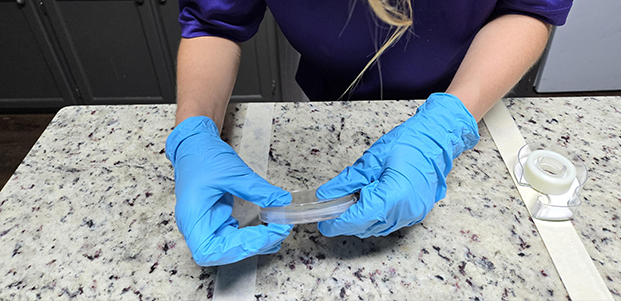
One of her projects tested eco-friendly cleaner options to effectively remove harmful bacteria left by raw poultry, like Salmonella and Staphylococcus aureus. Some of the options tested were vinegar, hydrogen peroxide, Clorox, and lemon, oregano, and thyme essential oils.
“After five trials and seven-day petri dish cultures, hydrogen peroxide proved to be the most effective, eliminating 93.63% of bacteria,” Brummond said.
“Throughout my experience of raising breeding and market poultry and doing research projects in the poultry industry, I have formed a love for the poultry industry and want to continue learning about the poultry industry in the future,” Brummond said. “I want to get a degree in poultry science and then proceed to get my doctorate in veterinary medicine and practice in the poultry industry.”
Brummond's successful SAE project was recognized at the 2025 Texas FFA State Convention as a Star Lone Star Agriscience.